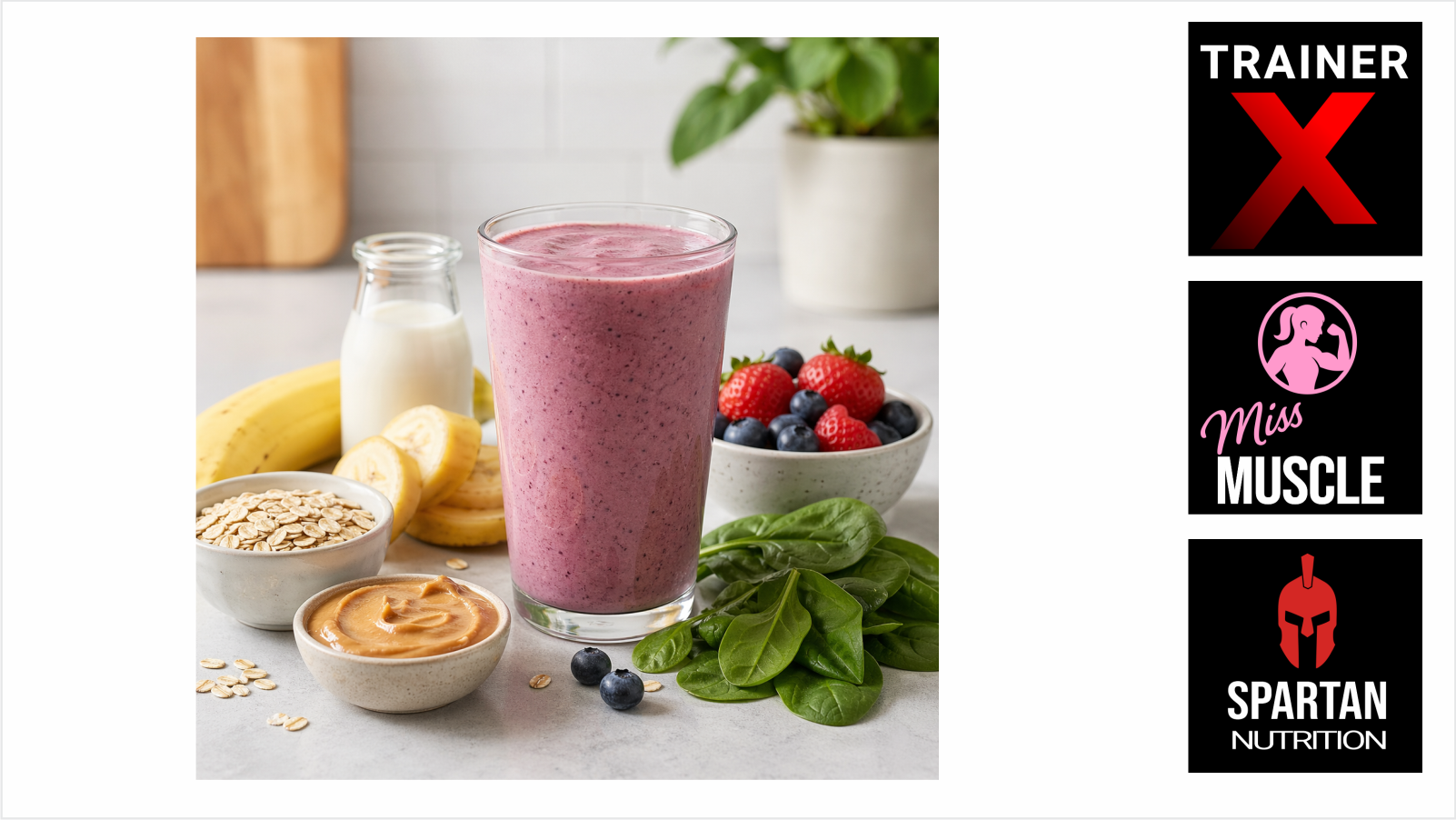
Smoothies are not magic, and they are not automatically healthy just because they are blended. What makes them powerful is that they are one of the most practical ways to make good nutrition easier to consume, easier to control, and easier to stick to. For people trying to lose weight, gain weight, maintain weight, or simply eat better with less friction, smoothies can be one of the smartest methods available.
• Smoothies are not a shortcut. They are simply a practical method of nutrient intake.
• They can help with both weight loss and weight gain, depending on the ingredients and portion size.
• Blending food reduces the mechanical burden of chewing and stomach churning, which may help some people with appetite or digestive comfort.
• Smoothies often lead to better food choices because they are usually built from purposeful ingredients.
• The real value of smoothies is consistency. They make structured nutrition easier to follow in real life.
One of the biggest mistakes people make with nutrition is thinking there is only one proper way to eat.
There is not.
Some people do very well eating full meals throughout the day. Some people prefer fewer, larger meals. Some people combine whole meals with shakes or smoothies. Some people do better when one or two of their meals are blended because it makes eating easier and more manageable.
None of these methods is automatically superior on its own.
The method only matters if it helps you do the following:
Stay within the right calorie range
Hit your protein target
Get enough nutrients in
Manage hunger properly
Stay consistent over time
That is why smoothies can work for both weight gain and weight loss.
If someone needs more calories, a smoothie can make it easier to get them in without the heaviness of another full meal.
If someone is trying to lose weight, a smoothie can help structure food intake, reduce random snacking, and make healthier choices easier to stick to.
If someone is maintaining weight, a smoothie is simply another practical tool.
So the value is not in the blender itself. The value is in the control, simplicity, and consistency it allows.
This is another reason I like them.
The smoothie format naturally pushes people toward more purposeful ingredients. Fruit, oats, yogurt, milk, protein powder, peanut butter, seeds, spinach, and similar foods are all easy to use in a smoothie. That means the meal is often built with intention.
Most people are not going to blend a burger. Most people are not going to blend steak. Most people are not going to blend a plate of junk food and enjoy it. So in practice, smoothies often clean up decision making.
They make people think in terms of ingredients, not just cravings.
That alone is a huge advantage.
It does not mean every smoothie is automatically good. It simply means that the format makes it easier to choose foods that serve a purpose.
And yes, smoothies can be absolutely delicious. That is not a problem. Taste is not the enemy. The problem starts when taste becomes the only goal. Once the focus becomes dessert in a blender, the point is lost.
Just like some so called protein drinks are really just flavored milkshakes with a bit of added protein, the same thing can happen with smoothies. So the question is never just, is it a smoothie? The question is, what is in it, and what is it designed to do?
Your goal must match your recipe.
A peanut butter based smoothie can be excellent for someone trying to gain weight or needing a high calorie meal. That same smoothie may not be appropriate for someone trying to stay in a calorie deficit unless the portion is controlled. So again, the smoothie itself is not the issue. The issue is whether it fits the goal.
It also helps to understand what happens in the body, because this is where smoothies can have real practical benefits.
With a normal meal, chewing breaks food down into smaller pieces and mixes it with saliva. With a smoothie, much of that mechanical breakdown has already been done by the blender. That does not mean digestion is skipped. It simply means the food enters the stomach in a much finer, more uniform form.
The stomach still has to do its job. It still uses acid and enzymes. It still churns the food. But because the smoothie is already mechanically broken down, there is generally less physical work needed compared with a large solid meal.
This is one of the reasons smoothies can feel easier for some people. They do not remove digestion, but they can reduce the mechanical burden of the early stage.
This is where most nutrient absorption takes place. Protein, carbohydrates, fats, vitamins, and minerals are absorbed here. A smoothie still goes through this process exactly like any other meal. The advantage is not that it bypasses absorption. The advantage is that it may arrive in a form that is easier for some people to tolerate and easier to consume consistently.
What remains after absorption passes into the large intestine. Water is absorbed, gut bacteria act on some of the leftover material, especially fiber, and the remaining waste becomes more solid before being passed out.
This matters because smoothies can change how bulky or manageable a meal feels on the way through the system. For some people, that is helpful. For others, it depends entirely on what is blended.
If a smoothie is loaded with too much fiber, too much lactose, too much fruit sugar, or too much total volume, it can still cause bloating or discomfort. So again, the blender is not the magic. Ingredient selection is everything.
Because the food is already finely broken down, some people find smoothies easier to handle than large, heavy, solid meals. They may feel less stuffed. They may have less discomfort. They may find it easier to eat enough without feeling weighed down.
This can help people who have low appetite, sensitive digestion, or simply do not enjoy constantly chewing through large meals.
It can also help people who struggle with routine. A smoothie is easy to prepare, easy to repeat, and easy to measure. That makes it more likely that they will actually follow through.
And that is one of the most underrated parts of nutrition. A good plan only works if you can actually stick to it.
This is probably their biggest strength.
A lot of people fail with nutrition not because they do not know what to eat, but because they cannot keep doing it. They get busy. They skip meals. They lose appetite. They get bored. They find meal prep exhausting. They start off motivated and then drift.
Smoothies can reduce a lot of that friction.
They are quick.
They are measurable.
They are portable.
They are easy to repeat.
They can be built for different goals.
And when done correctly, they can be very satisfying.
That is why I believe they are one of the best practical tools in a health conscious eating plan.
Not because they are fashionable.
Not because they are liquid.
Not because they replace whole food.
But because they make structured nutrition easier to live with.
I do not see smoothies as a shortcut. I see them as a smart method.
They do part of the mechanical work before the food even reaches the stomach.
They can make good nutrition easier to consume.
They can help people stay within a calorie target, whether that target is for weight gain, weight loss, or maintenance.
They often encourage better ingredient selection.
They can be gentler for some people with appetite or digestive issues.
And perhaps most importantly, they help people stay consistent.
That is why I am such a fan of them.
At TrainerX, the goal is not to put out random isolated content just for the sake of posting. Everything we share is meant to connect back to something useful and practical on the website, whether that is an article, a recipe, a guide, a meal plan, or a product built around a specific goal.
That means when you see a short Facebook post, a TikTok clip, a recipe card, or a quick nutrition tip, it is usually part of a bigger system. The short form content gives you the idea. The website gives you the full value.
Some smoothie recipes may already be on the site. Some may be added later. Some may appear first in posts before being expanded into something more structured. But the point is the same: to give you practical nutrition tools that actually fit real life.
No. Smoothies can be useful for weight gain, weight loss, or maintenance. It depends on the ingredients, the calorie content, and how they fit into the person’s overall eating plan.
For some people, yes. Because the food is already mechanically broken down, smoothies may feel lighter and easier to tolerate. But they do not bypass digestion, and poor ingredient choices can still cause bloating or discomfort.
They can replace some meals, but they do not need to replace all of them. For most people, smoothies work best as one useful tool within a wider eating plan that still includes solid meals.
The ingredients and the purpose. A good smoothie matches the goal. A bad smoothie is usually just a dessert disguised as health food, with lots of sugar and no real structure behind it.
Because method is what makes good nutrition practical. If a method helps you control calories, hit your protein, improve consistency, and stay aligned with your goals, then it has real value.
Want practical smoothie ideas, meal strategies, and fitness nutrition that actually fits real life? Follow TrainerX and explore the site for recipes, articles, plans, and tools built around real goals, not gimmicks.
Disclaimer
Information on this site is general and for education only, based on research sources and our opinions, with references for further reading. It is not medical, nutritional, or fitness advice; consult a qualified healthcare practitioner before starting any exercise, diet, supplement, or medication. We make no claims, guarantees, or warranties, and use is at your own risk. Products and supplements mentioned are not intended to diagnose, treat, cure, or prevent any disease.